Have you ever heard of diastema? In this article, Dr. Normand Bach, your orthodontist in the heart of Montreal, will tell you everything you need to know.
What Is Diastema?
The term diastema describes a gap between the teeth. It is more visible when it is present between the two upper front teeth, also known as the central incisors.
Both children and adults can have diastema. It is not a rare phenomenon. In fact, it is relatively common.
This gap between the teeth can vary in size. It can be small and barely noticeable, or larger and more visible.
Children can develop diastema very early on, but it can also occur during adolescence and even in adulthood.
Common Causes of Diastema
Genetics is a common cause. It is very likely that a child inherits this condition if one or both parents had a gap between their teeth.
There are other causes. When there are one or more teeth missing as a result of an extraction, for instance, the neighbouring teeth tend to shift to fill in the space. This creates an even wider diastema.
Studies have also shown that people who have an abnormal swallowing reflex, pressing their tongue against their front teeth when they swallow or speak, can develop diastema over time. Although it is less common than the other causes mentioned previously, there have been reported cases of tongue thrusting causing diastema.[1]
Furthermore, some habits in young children, such as thumb sucking or using a pacifier past the recommended age, can make the teeth shift and eventually lead to diastema.
In short, there are many causes. Diastema is not caused only by genetics, and it does not occur in children only. As mentioned previously, it can also develop in adults.
Diastema: Should You Be Concerned?
To properly answer this question, two factors should be considered.
First, from an aesthetic perspective, dental diastema can either enhance your appearance or be a source of concern.
If the gap between your teeth does not bother you and even adds charm to your appearance, there is no need to treat your diastema. It is an integral part of your personality. However, if diastema affects your self-esteem, it is possible, as we shall see, to treat it to improve your smile.
In addition, when the gap is too wide, malocclusion can develop and affect your teeth and your ability to chew food.[2] In such cases, treatment is strongly recommended. A visit to Dr. Normand Bach’s clinic will allow for the correct diagnosis and help determine the most suitable treatment option.
Diastema Treatment Options
Diastema can be corrected in various ways, and several treatments deliver the desired results.
Among the range of treatments available are the following:
Metal Braces
They are very effective at correcting diastema. They will bring your teeth closer within 12 to 24 months and ensure better alignment of your teeth.
Although they are visible, the results are extremely promising.
Invisalign
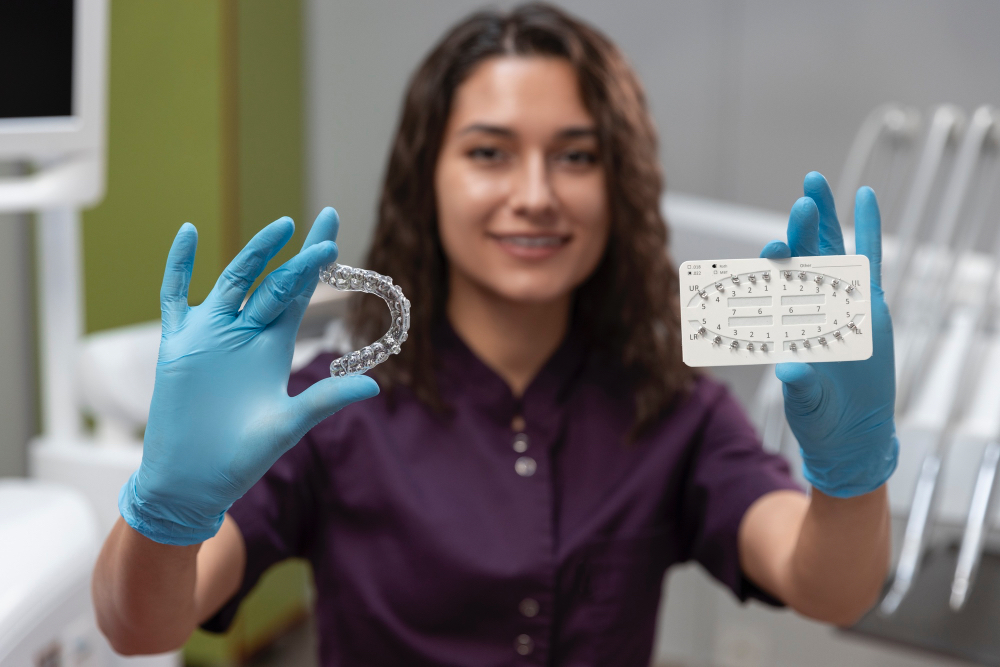
Invisalign aligners are very popular because they are invisible, unlike metal braces. With regular check-ups and adjustments along the way, the gap between your teeth will gradually close.
Invisalign aligners will be highly effective if worn for 20 hours a day. The only times they can be removed are during meals and when brushing your teeth.
Dental Veneers
Dental veneers can be used to correct diastema. They are thin shells of porcelain or resin applied on the surface of the teeth that last for around 12 to 15 years. Veneers will conceal the gap between your teeth and help you restore a bright and dazzling smile.
Bonding
If your diastema is small, your orthodontist could suggest dental bonding. It is a cost-effective solution that can be carried out in one session. Your orthodontist will apply a composite resin on the sides of your front teeth to close the gap.
As you can see, there are several treatment options available for correcting diastema. Your orthodontist will suggest the most effective treatment based on your specific situation.
Dr. Normand Bach Is the Orthodontist You Need
Make an appointment at the Dr. Normand Bach clinic today! Our professional team will take care of everything and restore your smile.
—————————–
[1] https://dumas.ccsd.cnrs.fr/dumas-02280437/file/LACEB.pdf
[2] https://uca.hal.science/dumas-05015320/
